


In your case, as a single filer without dependents, 1 allowance on your W-4 would be appropriate. In addition to your W-2, if you are also paid on a 1099-MISC for side work as an independent contractor, then you may want to make estimated tax payments, since there's usually no withholding on 1099-MISC income. 2020 W-4 SAMPLE - claiming 'single'.pdf This sample document provides instructions on how to complete 2020 W-4 federal tax withholding certificate if an employee has evaluated their tax situation and determined that claiming 'single' is appropriate for their situation.
- W 4 Vs W 2
- W 4 Single 0 Or 1
- W-4 Single 0 Example
- W 4 Single Claim 0 Or 1
- Sample W-4 Single And 0
- W 4 Single And 0
Have you asked yourself the following question: Should I claim 0 or 1 or even 2 on my W4? Keep on reading to find out the ideal total number of allowances you should claim. One of the first things you do when you start a new job is to fill out your W-4.
Contents
- 2 How many allowances can I claim?
- 9 FAQs
- 10 Will tax returns be bigger in 2020?
What is a W-4 form anyways?
Formally known as the Employee Withholding Allowance Certificate, a W-4 form tells your employer how much federal income tax they need to deduct from your income. Deductions are also based on your earnings. The more allowances you claim, the less money withheld from each payback but, in return, you’ll receive a lower refund, if any, at the end of the year. The number you claim affects your take-home amount and your refund on tax day so it’s important not to write down just any number but to assess your situation and make a smart financial decision. This is what a W-4 form looks like: It has the same due date as a W-2, which is on April 15th, unless it falls on a weekend. In that case, they are due on the first business day after. Make sure to prepare your taxes ahead of time, as we know doing your taxes can take a while depending on the complexity.
How many allowances can I claim?
How many allowances you can claim is determined by your filing status, how many – if any – dependents you have, and how many jobs you have. If you have a software like Turbo Tax, H&R Block, or free software to file your taxes then it will help you fill this part out. But keep in mind, that you don’t have to claim all the allowances you’re entitled to. In fact, depending on your situation, it might be in your best interest to claim 0, 1 or more than 1.
Claiming 0 Allowances
Claiming zero allowances means that the maximum amount of taxes will be withheld from your paycheck. This means that come tax season, you’ll most likely get more money back. When should you claim 0 allowances? There are only a few situations where I would recommend you claim zero allowances on your W-4 form.
- If someone is claiming you as a dependent. When someone claims you as a dependent, they get the benefit of your personal exemption. Which means their tax burden will be lowered, but yours will be a little higher which is why you should claim zero allowances. This doesn’t necessarily mean you won’t get a refund during tax time, however.
- If you know you’re bad at saving and want to save on easy mode. Despite what some may believe, your refund isn’t “free money”. Getting one means you’re overpaying on your taxes every paycheck and at the end of the tax year, the IRS returns the extra money you paid. This means you can easily “trick” yourself into saving money by claiming 0 allowances and then have the IRS e-deposit the amount due into a savings account. Of course, this is not ideal, because you’re not earning interest on that money for that whole year. But it’s a great way to force yourself to save.
Claiming 1 Allowance
Claiming 1 allowance means that a little less tax will be withheld from your paycheck than if you claimed 0 allowances. Here’s when I would recommend you claim one allowance.
- If your filing status is single and you have one job then this is the safe choice. If you are just an individual and barring any complicated tax situations, you’ll most likely still receive a refund. Though it will be smaller than if you claim zero allowances. This is the most common number of allowances claimed
Claiming 2 Allowances
You probably know the drill by now. Claiming two allowances means even less tax withholding from every paycheck. Here are the situations in which you should claim two allowances:
W 4 Vs W 2
- If you’re not married and you want to get as close as possible to break-even as possible (getting a $0 tax refund). However, depending on your tax situation, you may end up owing a little bit. If your financial health is good, this is the number of tax allowances I recommend that you claim.
- If you have a second job and your filing status is single, you’ll end up filling out a W-4 for each job. You can claim 1 allowance on each form W-4 OR you can claim 2 allowances on one W-4 and 0 on the other.
- If you’re married with no kids. If you file jointly, you can claim two allowances. One for you and one for your spouse. Not sure if you should file jointly or file separately? Here’s a good primer by TurboTax.
Claiming 3 Or More Allowances
You can claim more than 2 allowances with your spouse if you have one child or more. Basically, you get one allowance per child so your child tax credit is as follows:
- Claim 3 allowances if you’re married and have 1 child
- Claim 4 allowances if you’re married and have 2 children
- You can guess the rest
Can I claim 99 allowances?
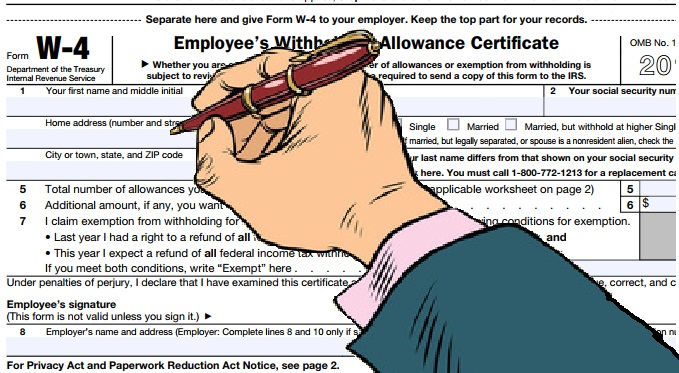
You technically can claim 99 allowances BUT you definitely shouldn’t. According to the IRS, 10 million people underpaid their taxes in 2015 and ended up having to pay a hefty fine – they have to pay what they owed, plus interest, and a fine. This has personally happened to me when I accidentally underreported my income (it was my first year doing taxes!) and therefore underpaid my federal income tax. Income tax is a pay-as-you-go tax which means you can’t just wait until payment is due to give all your taxes as a lump sum. You have to either withhold enough tax from each paycheck or make quarterly estimated tax payments. Withholding your taxes by filling out a W-4 form with the correct amount of allowances is the easiest way to avoid underpaying.
So should I claim 0 or 1 allowance?
As I mentioned earlier in this article, depending on your specific situation, it may be beneficial to claim less allowances as you’re entitled to. The more allowances you claim, the less tax is withheld. This is a good situation to be in if you’re in good financial health and just have one job (having multiple jobs can make taxes more complicated)- as long as you don’t end up owing too much tax. But, if you’re living paycheck to paycheck and don’t have any kind of emergency fund, then claiming fewer allowances than you’re entitled to may be a good option.
This means you’ll be receiving less each paycheck but at the end of the year, you’ll receive all the extra money that was withheld as a lump sum. You can use your tax return to build up your emergency fund or to pay off any consumer debt. You’re basically forcing yourself to save money from each paycheck. Just don’t treat it as a “bonus”. You have to decide for yourself whether you want to “fool” yourself into savings or not by claiming extra allowances.
Can I change my W-4 allowance?
You can change the number of allowances you claim at any time. Just fill out a new W-4 and give it your employer. There are some life events that happen which change the number of allowances you should claim. Getting married and having a kid are the two most common of these life events.
Can I Claim 2 on my W4?
It certainly is appropriate to claim 2 on your W4 form in many cases. If you are married and filing jointly and you both are employed, and you have kids to claim as tax credit, the personal allowance worksheet may tell you that 2 is the right number of allowances for your situation. Note: Tax credit actually reduces the amount you owe, while tax deducations affects how much is taken from you by your employer. Two allowances, is actually the recommended number of allowances for most couples. However, just because the personal allowance worksheet tells you that you that 2 allowances is the right claim, you may want to claim more or even less, than what is recommended. Keep in mind, and I mentioned this earlier in this article, there are some benefits and downfalls to claiming more or less. If you need to keep a bit more money in your monthly paycheck, you may want to claim more, and this can be handy for those that are living paycheck to paycheck, but this is a potential tax liability if you are claiming too much. Just keep in mind that claiming more allowances than you are actually entitled to, may mean a hefty tax bill at the end of the year. If you don’t want to risk a tax bill, you may want to pay more taxes now, and claim fewer allowances. This will likely result in a larger tax return, which can easily be deposited into a savings account or used for other expenses. Keep in mind however, your tax contributions aren’t a good “savings account”, there are better ways to save money, than to pay more each month in taxes.
Can I Claim Exempt?
If you are tax exempt it means you are not subject to any withholdings and you will keep all of your paychecks. However, knowingly lying is tax fraud and you may be subject to penalty. Only claim tax-exempt if the government gave that status to you last year. If you’re not sure, don’t claim exception – there can be some dangerous financial ramifications.
What is the average number of claims on W4?
According to H&R Block the average number of claims on a W4 is 2.5. However, we do know that 0 and 1 are really popular options for people with a variety of tax situations. It seems that lots of people, though able to take more allowances on their inces taxes, choose to take fewer than they should or could. In fact, on average most people are eligible for an additional 1-2 claims. If you have a kid or are in an education program then you can put a higher number down. There is certainly some concern about that unexpected tax bill at the end of the year, and if you’re living on a budget, it might be easier to take a reduction in your monthly income, that you plan around, than try to figure out how to pay a tax bill come April 15th since in that case you’ll have to pay out of pocket to pay your income taxes. Getting a tax return is another reason that many people choose 0 or 1. The reality here is that paying too much in taxes is just as impractical as not paying enough. However, many would much rather overpay, and get a refund, than try to save money each month, or do the work to have neither a refund or a tax bill at the end of the year. Of course this is the ideal situation, but so frequently tax payers see the refund as a great savings opportunity.
FAQs
Is it better to claim 1 or 0?
It is better to claim 1 if you are good with your money and 0 if you aren’t. This is because if you claim 1 you’ll get taxed less, but you may have to pay more taxes later. If you do you’ll have to address this out of pocket and if you didn’t save up enough you may have to wait to take care of your tax bill. If you put 0 you’ll be taxed more but are much more likely to get a refund. Some people prefer putting 0 because they don’t have to worry about saving money for their tax bil and would rather get less money now and a tax-refund check later.
What does it mean to claim an allowance?
The more allowances you claim on your W4 the less income will be held back by your employer and the more money you will get in your paycheck. The most common allowances to claim involve being a full time student, a dependent (if someone claims you as a dependent, often children), or marriage status. While you can claim as many as you want there can be consequences to not paying enough taxes. You may have to write a check to the US Treasury when it comes time to do your taxes, and if you owe $1000 or more you will be hit with an additional fee due to a “large misrepresentation of taxes”. Waiting multiple years to pay it off can also result in you paying interest.
How many allowances do I claim on w4?
You want to claim the amount of allowances on your W4 that is honest – the average is 2.5. Don’t aim to claim a specific number. The more honest you are the less surprises you will have come tax day.
Can I claim more than 10 allowances?
You certainly can claim more than 10 allowances, but if you are falsely claiming them then you will owe the US Treasury & Government money. How much depends on the difference between how much you should actually claim. The more false claims you make the more you’ll owe and you will likely have to additional taxes on April 15, in addition to fees.

What is claiming 2 on taxes mean?
Claiming 2 on taxes means you are claiming 2 allowances on taxes. The average number to claim is 2.5. The higher the number you are claiming the less your employer withholds from your paycheck. However, when you file your taxes if you claimed a higher number than you are supposed to you will have to pay taxes on that amount.
What is the maximum tax refund you can get?
There is no dollar amount when it comes to the maximum you can get. It is relative to how much you make and the number of allowances you didn’t claim. The more you make and fewer allowances you claim (minimum of 0) will enable you to have larger tax returns.
Do you get a bigger tax refund if you make less money?
You do not necessarily get a bigger tax refund if you make less money. The amount you get is directly proportionate to how much money you make and how many claims you could have, but didn’t make. If you make more money you are eligible for a larger tax refund (because it is proportionate to your income). The less claims you make the more likely you are to get a higher proportion of your money back as a tax refund.
Will tax returns be bigger in 2020?
Tax returns will not change in 2020. However, there will be a slight change in income tax brackets which could affect the amount of money you get from a tax return, depending on your new bracket.

How many allowances do you claim? Are you planning on changing the amount soon?
For less than 5 minutes of your time, earn yourself a random stock (anything from Sprint to Apple) whose value is anywhere between $2.50 and $200. It is possible through an investing app called Robinhood.
Earn the sign-up bonus by signing to Robinhood now.
The key difference between single and head of household is that for tax purposes, you can qualify as single if you’re single (unmarried, divorced, or, legally separated) whereas you can qualify as head of household if you are single, have a qualifying child or relative living with you, and pay more than half the costs of your home.
An IRS tax filing status is a classification that determines many details about a tax return. There are five filing status as single, married filing jointly, married filing separately, head of household, and qualifying widow(er) with dependent child. Single and head of household are two of this status for unmarried or single people.
CONTENTS
1. Overview and Key Difference
2. What Does Head of Household Mean
3. What Does Single Mean
4. Similarities Between Single and Head of Household
5. Side by Side Comparison – Single vs Head of Household in Tabular Form
6. Summary
What Does Head of Household Mean?
Head of Household is a tax filing status most people find confusing. However, it is very important to know about this filing status as it offers many benefits. This is a filing status for single or unmarried taxpayers who keep up a home for a ‘Qualifying Person’. To be more specific, you have to meet the following requirements to file as Head of Household.
- You are unmarried or considered unmarried until the last day of the year (this includes single, divorced, or separated people)
- You have paid more than half the cost of keeping up a home for the year.
- A ‘qualifying person’ lived with you at home for more than half the year, except for temporary absences.
A qualifying person is generally a dependent that lives with you. For example, an unmarried and unemployed daughter who lives with you can qualify as a ‘qualifying person’. You can use this link to determine whether the relatives who live with you are qualifying persons or not.
Furthermore, if you want to determine whether you have paid for more than half the cost of keeping up a home, the following are some of the expenses you have to take into account:
- Rent
- Mortgage interest
- Insurance payments
- Utility bills
- Food
- Property taxes
- Repairs and maintenance
- Other household expenses
If you meet the above requirements, you can apply as head of household. As mentioned above, this filing status has many benefits. The tax rate for this filing status is usually lower than the rates for single or married filing separately. Furthermore, this status also receives a higher standard deduction than single or married filing separately statuses.
W 4 Single 0 Or 1
What Does Single Mean?
Single is the filing status for unmarried people who do not qualify for Head of Household status. You can file your status as single if you were unmarried on the last day of the year, and do not qualify for any other filing status.
For tax purposes, a person’s marital status for the entire year is determined by his or her marital status at the end of the year, i.e., December 31st. If you are divorced or legally separated by December 31st, then you are considered to be unmarried for the whole year. However, if you are unmarried, but have a dependent child or a qualifying person, you can file status as Head of Household as it has several benefits over the single status.
W-4 Single 0 Example

What is the Similarity Between Single and Head of Household?
- Single and Head of Household are two IRS tax filing status for single people.
What is the Difference Between Single and Head of Household?
Single is an IRS tax filing status for unmarried people who do not qualify for another filing status. In contrast, Head of Household is an IRS tax filing status for single people who have a qualifying child or relative living with them, and pay more than half the costs of their home. These definitions explain the key difference between single and head of household.
Furthermore, the major difference between single and head of household is their requirements. Being single on the last day of the year, and not qualifying for any other filing status are the only two requirements for qualifying as single. But, qualifying as head of household has three main requirements: being unmarried or considered unmarried on the last day of the year, paying more than half the cost of keeping up a home for the year, and having a ‘qualifying person’ living at home for more than half the year. Furthermore, the head of household status has many benefits over single status. The tax rate for head of household is lower, and the standard deduction rate is higher when compared to single status. Thus, this is another important difference between single and head of household.
Summary – Single vs Head of Household
Single and Head of Household are two IRS tax filing status for single people. The key difference between single and head of household is that Single is a tax filing status for unmarried people who do not qualify for another filing status while Head of Household is an IRS tax filing status for single people who have a qualifying child or relative living with them, and pay more than half the costs of their home.
W 4 Single Claim 0 Or 1
Reference:
Sample W-4 Single And 0
1. “Publication 501 (2017), Exemptions, Standard Deduction, and Filing Information.” Internal Revenue Service. Available here
2. “IRS Head of Household Filing Status.” Efile.com Taxes Made Simple. Available here
Image Courtesy:
1.”491626″ by stevepb (CC0) via pixabay
2.”16687016624″ by Pictures of Money(CC BY 2.0) via Flickr
W 4 Single And 0
Related posts: