



Human augmentation conjures up visions of futuristic cyborgs, but humans have been augmenting parts of the body for hundreds of years. Glasses, hearing aids and prosthetics evolved into cochlear implants and wearables. Even laser eye surgery has become commonplace.
Future Technologies Inc. Has been appraised at CMMI Level 3 for Development and CMMI Level 3 for Services of the CMMI Institute’s Capability Maturity Model Integration (CMMI). CMMI is a process improvement approach that provides organizations with the essential elements of effective processes that ultimately improve their performance. That means future technology trends will change with respect to dynamic social trends. And these social trends changes with respect to changing needs and demands. There are several reasons behind rapidly changing tech trends such as coping with scarcity of resources, improving life standards, increasing overall efficiency and cutting extra. Future tech news. Apple Glasses leak hints at half-inch Sony OLED microdisplay for 2022 launch. By Michael Hicks. Apple's AR Glasses could also have virtual keyboards, track your facial. Tech of the future: nanobots. He believes, that by the 2050, nanobots will plug our brains straight into the cloud 3, it will give us full immersion virtual reality from within the nervous system. Just like we do know with our smartphones, we will be able to do it with our brains, we’ll be able to expand our neocortex in the cloud.
But what if scientists could augment the brain to increase memory storage, or implant a chip to decode neural patterns? What if exoskeletons became a standard uniform for autoworkers, enabling them to lift superhuman weights? What if doctors could implant sensors to track how drugs travel inside a body?
Explore the latest: Gartner Top Strategic Technology Trends for 2021
Gartner Top 10 Strategic Technology Trends 2021
Technology is now on the cusp of moving beyond augmentation that replaces a human capability and into augmentation that creates superhuman capabilities.
How these changes will impact the world and business makes human augmentation one of Gartner’s top 10 strategic technology trends that will drive significant disruption and opportunity over the next five to 10 years.
The trends are structured around the idea of “people-centric smart spaces,” which means considering how these technologies will affect people (i.e., customers, employees) and the places that they live in (i.e., home, office, car).
“These trends have a profound impact on the people and the spaces they inhabit,” says David Cearley, Gartner Distinguished VP Analyst, Gartner. “Rather than building a technology stack and then exploring the potential applications, organizations must consider the business and human context first.”
These trends don’t exist in isolation; IT leaders must decide what combination of the trends will drive the most innovation and strategy.
For example, artificial intelligence (AI) in the form of machine learning (ML) with hyperautomation and edge computing can be combined to enable highly integrated smart buildings and city spaces. In turn, these technology combinations enable further democratization of the technology.
Trend No 1. Hyperautomation
Automation uses technology to automate tasks that once required humans.
Hyperautomation deals with the application of advanced technologies, including artificial intelligence (AI) and machine learning (ML), to increasingly automate processes and augment humans. Hyperautomation extends across a range of tools that can be automated, but also refers to the sophistication of the automation (i.e., discover, analyze, design, automate, measure, monitor, reassess.)
Hyperautomation often results in the creation of a digital twin of the organization
As no single tool can replace humans, hyperautomation today involves a combination of tools, including robotic process automation (RPA), intelligent business management software (iBPMS) and AI, with a goal of increasingly AI-driven decision making.
Although not the main goal, hyperautomation often results in the creation of a digital twin of the organization (DTO), allowing organizations to visualize how functions, processes and key performance indicators interact to drive value. The DTO then becomes an integral part of the hyperautomation process, providing real-time, continuous intelligence about the organization and driving significant business opportunities.
Trend No. 2: Multiexperience
Multiexperience replaces technology-literate people with people-literate technology. In this trend, the traditional idea of a computer evolves from a single point of interaction to include multisensory and multitouchpoint interfaces like wearables and advanced computer sensors.
Future Technologies Conference 2020
For example, Domino’s Pizza created an experience beyond app-based ordering that includes autonomous vehicles, a pizza tracker and smart speaker communications.
In the future, this trend will become what’s called an ambient experience, but currently multiexperience focuses on immersive experiences that use augmented reality (AR), virtual (VR), mixed reality, multichannel human-machine interfaces and sensing technologies. The combination of these technologies can be used for a simple AR overlay or a fully immersive VR experience.
Trend No. 3: Democratization

Democratization of technology means providing people with easy access to technical or business expertise without extensive (and costly) training. It focuses on four key areas — application development, data and analytics, design and knowledge — and is often referred to as “citizen access,” which has led to the rise of citizen data scientists, citizen programmers and more.
For example, democratization would enable developers to generate data models without having the skills of a data scientist. They would instead rely on AI-driven development to generate code and automate testing.
Gartner IT Symposium/ Xpo®
Objective insights, strategic advice and practical tools to help CIOs and IT executives achieve their most critical priorities
Trend No. 4: Human augmentation

Human augmentation is the use of technology to enhance a person’s cognitive and physical experiences.
Physical augmentation changes an inherent physical capability by implanting or hosting a technology within or on the body. For example, the automotive or mining industries use wearables to improve worker safety. In other industries, such as retail and travel, wearables are used to increase worker productivity.

Physical augmentation falls into four main categories: Sensory augmentation (hearing, vision, perception), appendage and biological function augmentation (exoskeletons, prosthetics), brain augmentation (implants to treat seizures) and genetic augmentation (somatic gene and cell therapy).
AI and ML are increasingly used to make decisions in place of humans
Cognitive augmentation enhances a human’s ability to think and make better decisions, for example, exploiting information and applications to enhance learning or new experiences. Cognitive augmentation also includes some technology in the brain augmentation category as they are physical implants that deal with cognitive reasoning.
Human augmentation carries a range of cultural and ethical implications. For example, using CRISPR technologies to augment genes has significant ethical implications.
Trend No. 5: Transparency and traceability
The evolution of technology is creating a trust crisis. As consumers become more aware of how their data is being collected and used, organizations are also recognizing the increasing liability of storing and gathering the data.
Additionally, AI and ML are increasingly used to make decisions in place of humans, evolving the trust crisis and driving the need for ideas like explainable AI and AI governance.
This trend requires a focus on six key elements of trust: Ethics, integrity, openness, accountability, competence and consistency.
Legislation, like the European Union’s General Data Protection Regulation (GDPR), is being enacted around the world, driving evolution and laying the ground rules for organizations.
Trend No. 6: The empowered edge
Edge computing is a topology where information processing and content collection and delivery are placed closer to the sources of the information, with the idea that keeping traffic local and distributed will reduce latency. This includes all the technology on the Internet of Things (IoT). Empowered edge looks at how these devices are increasing and forming the foundations for smart spaces, and moves key applications and services closer to the people and devices that use them.
By 2023, there could be more than 20 times as many smart devices at the edge of the network as in conventional IT roles.
Trend No. 7: The distributed cloud
Distributed cloud refers to the distribution of public cloud services to locations outside the cloud provider’s physical data centers, but which are still controlled by the provider. In distributed cloud, the cloud provider is responsible for all aspects of cloud service architecture, delivery, operations, governance and updates. The evolution from centralized public cloud to distributed public cloud ushers in a new era of cloud computing.
Distributed cloud allows data centers to be located anywhere. This solves both technical issues like latency and also regulatory challenges like data sovereignty. It also offers the benefits of a public cloud service alongside the benefits of a private, local cloud.
Trend No. 8: Autonomous things
Autonomous things, which include drones, robots, ships and appliances, exploit AI to perform tasks usually done by humans. This technology operates on a spectrum of intelligence ranging from semiautonomous to fully autonomous and across a variety of environments including air, sea and land.
While currently autonomous things mainly exist in controlled environments, like in a mine or warehouse, they will eventually evolve to include open public spaces. Autonomous things will also move from stand-alone to collaborative swarms, such as the drone swarms used during the Winter Olympic Games in 2018.
However, autonomous things cannot replace the human brain and operate most effectively with a narrowly defined, well-scoped purpose.
Read more: Human Beings, AI and Robotics Represent the New Workforce in 2028
Trend No. 9: Practical blockchain
Blockchain is a type of distributed ledger, an expanding chronologically ordered list of cryptographically signed, irrevocable transactional records shared by all participants in a network.
Blockchain also allows parties to trace assets back to their origin, which is beneficial for traditional assets, but also paves the way for other uses such as tracing food-borne illnesses back to the original supplier. It also allows two or more parties who don’t know each other to safely interact in a digital environment and exchange value without the need for a centralized authority.
The complete blockchain model includes five elements: A shared and distributed ledger, immutable and traceable ledger, encryption, tokenization and a distributed public consensus mechanism. However, blockchain remains immature for enterprise deployments due to a range of technical issues including poor scalability and interoperability.
Blockchain, which is already appearing in experimental and small-scope projects, will be fully scalable by 2023
Enterprise blockchains today take a practical approach and implement only some of the elements of a complete blockchain by making the ledger independent of individual applications and participants and replicating the ledger across a distributed network to create an authoritative record of significant events. Everyone with permissioned access sees the same information, and integration is simplified by having a single shared blockchain. Consensus is handled through more traditional private models.
Read more: The 4 Phases of the Gartner Blockchain Spectrum
The Real Business of Blockchain
How leaders can create value in a new digital age.
In the future, true blockchain or “blockchain complete” will have the potential to transform industries, and eventually the economy, as complementary technologies such as AI and the IoT begin to integrate alongside blockchain. This expands the type of participants to include machines, which will be able to exchange a variety of assets — from money to real estate. For example, a car would be able to negotiate insurance prices directly with the insurance company based on data gathered by its sensors.
Blockchain, which is already appearing in experimental and small-scope projects, will be fully scalable by 2023.
Trend No. 10: AI security
Evolving technologies such as hyperautomation and autonomous things offer transformational opportunities in the business world. However, they also create security vulnerabilities in new potential points of attack. Security teams must address these challenges and be aware of how AI will impact the security space.
AI security has three key perspectives:
- Protecting AI-powered systems: Securing AI training data, training pipelines and ML models.
- Leveraging AI to enhance security defense: Using ML to understand patterns, uncover attacks and automate parts of the cybersecurity processes.
- Anticipating nefarious use of AI by attackers: Identifying attacks and defending against them.
Tech companies rang in the start of the new year by unveiling some of their ambitious plans for the coming months. Startups and multinational companies alike are beginning to feel the ripple effects of innovation in the industry, with technology becoming more intertwined in everyday lives each year.
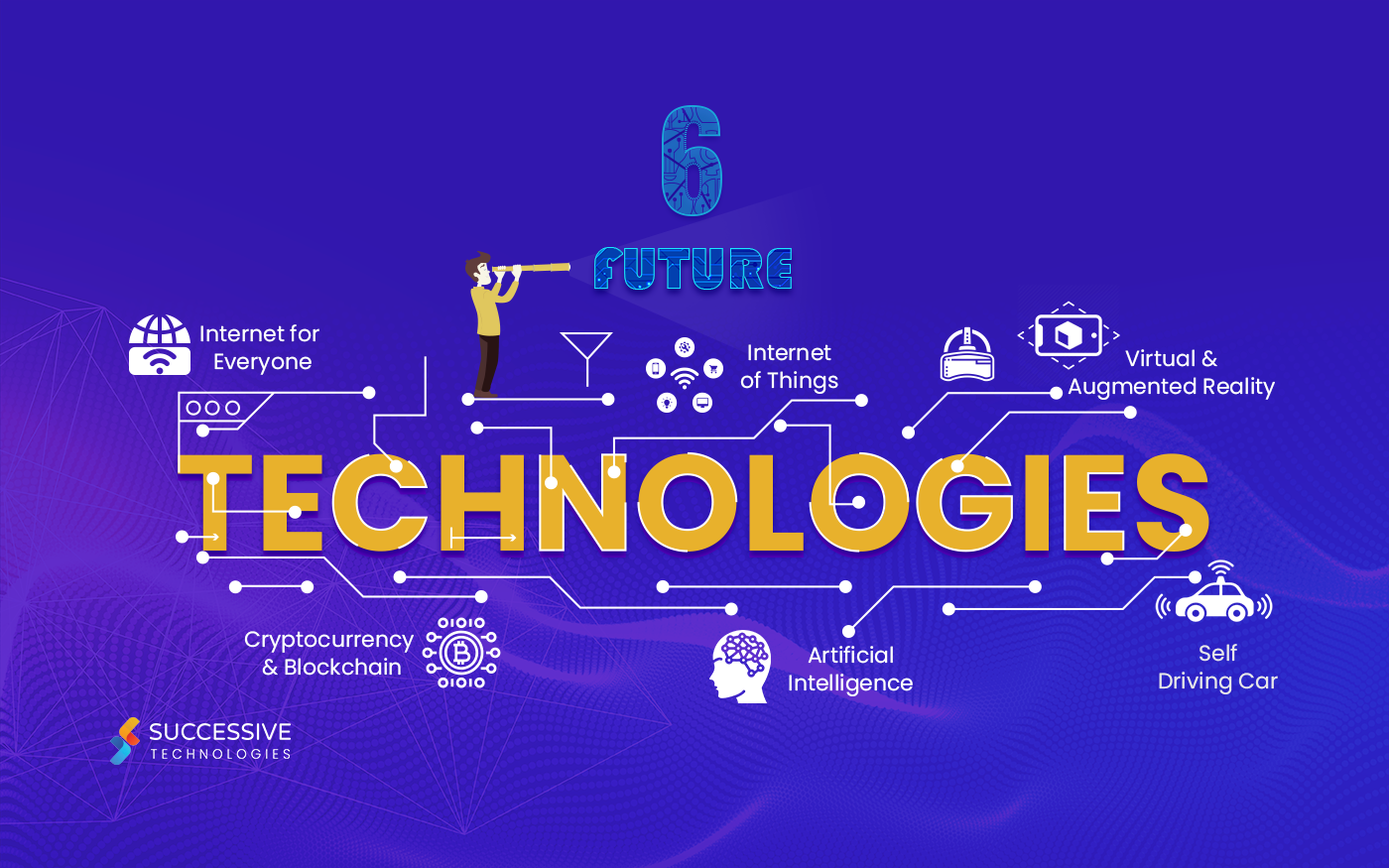
As 2018 progresses, here are 5 future technologies you can expect to reach the public in the next couple of years.
1. The Internet of Things
The Internet of Things has long been talked about amongst tech insiders as the next big innovation in home technology. In recent years, IoT has begun carve a niche for itself in everyday life with the growing adoption of systems like Google’s Home and Amazon’s Alexa. These devices will continue to integrate more aspects of the home into one harmonious system by utilizing the internet, allowing a user to control anything from the air conditioning to their security via voice command and a small personal assistant.
Apple has announced its plans to roll out the HomePod this year and Samsung is reportedly working on their Bixby technology in order to compete with the success of the Google and Amazon systems. You can expect that one of these devices will be simplifying life in your home and the homes around you by 2020.
2. Automation
While large-scale innovation in automation has traditionally been limited to the production side of society, the technology will have far reaching implications for consumers by 2020. Amazon’s automated grocery store, eliminating the need for cashiers, has been one of the first major tech triumphs of the year.
The store has proven itself successful as an efficient alternative for shoppers in its first location. The current cost of this technology, however, puts it out of the reach of pretty much any other storefront. As the technology continues to develop, consumers can expect that pressure sensors and cameras that automate pay and alleviate long lines in stores will be coming to groceries and pharmacies near you in the next couple of years.
3. Cryptocurrency
After Bitcoin’s meteoric price jump in 2017, major tech players have begun to take cryptocurrencies seriously. Along with major Initial Coin Offerings that have hit major news outlets like Etherium, smaller companies are developing Stablecoins that provide attempt to provide all the pros of cryptocurrency transactions without the price fluctuations that have plagued the system.

As these coins begin to work themselves out and exchanges even out the fluctuations in prices, expect these assets to be mainstream methods of payment by 2020.
4. Blockchain
Blockchain, the decentralized ledger that holds together cryptocurrencies, has applications reaching far beyond financial transactions. Companies have applied the technology to everything, from simplifying tracking and access to information in academia to interesting and amusing games that use complex algorithms to create unique experiences.
5. Artificial Intelligence
Future Technologies Lawrenceville Ga
Artificial intelligence, which once may have seemed like something out of a Sci-Fi novel, is seeing the light and applications of the technology are already being worked on. In particular, with the rise of the Internet of Things, Information Technology and Cybersecurity firms have begun to adopt artificial neural networks in order to monitor and prevent DDoS attacks.
Future Technologies Webmail
In addition to its security applications, companies like Amazon and Google have begun to apply the technology to regular consumers in order to simplify shopping and searching experiences on the platforms. With all the current progress of AI technology, it is reasonable to expect that by the year 2020 the innovation will be deeply entrenched in both business and consumer activities.